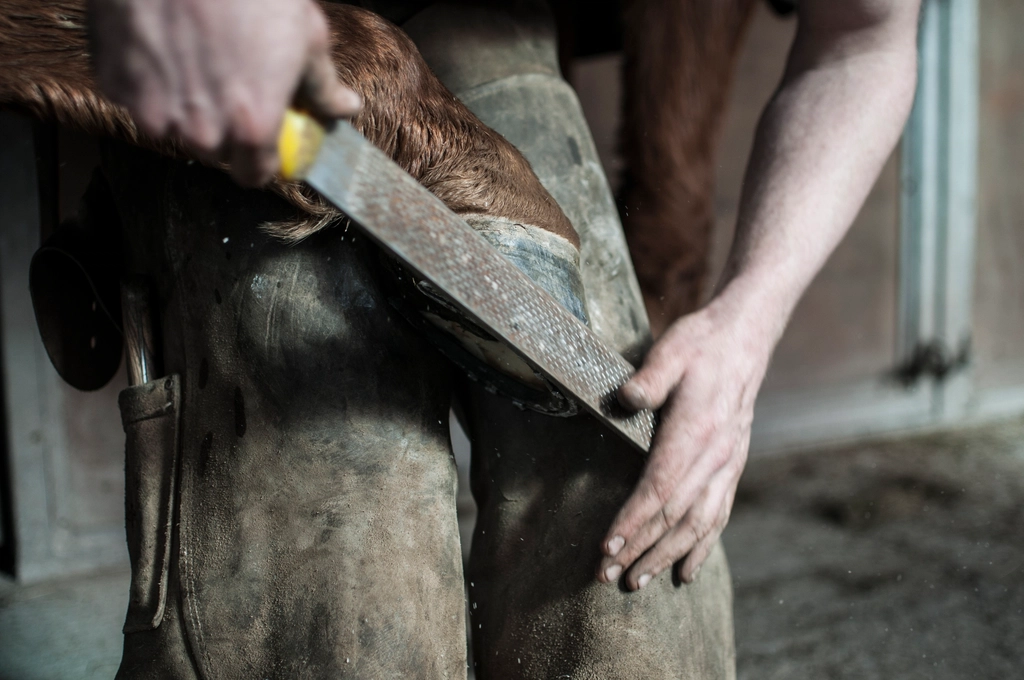
How to Take Payment Before Treating a Horse
There is a moment in every equestrian professional's working life that is quietly corrosive: finishing a job, driving away from the yard, and knowing — not suspecting, but knowing — that the invoice you're about to send may never be paid. It might be a horse owner who is habitually slow. A client who queried the last bill. Someone who seemed distracted when you mentioned the price. The work is done. The leverage is gone.
The professionals who have moved past this moment share one thing in common: they changed when payment was committed, not how aggressively they chased it afterwards.
Why "After the Work" Is the Wrong Payment Moment
Almost every payment problem in the equestrian industry is rooted in the same structural flaw: the service is delivered before any payment commitment is secured. The vet treats the horse. The farrier shoes it. The physio works on it. The invoice follows. The owner pays — or doesn't.
This model creates a predictable asymmetry. At the moment the professional is most motivated to be paid — when the work is complete and the value has been delivered — the client is least motivated to act. The emotional urgency that prompted the call-out has dissipated. The horse has recovered, the problem is solved, and a payment that felt urgent at 6am feels considerably less so when a PDF lands in an inbox three weeks later.
Flip the sequence — secure payment commitment before the work begins — and the asymmetry inverts. The client is most motivated at the point of need. Capture commitment then, and the payment is secured at the optimal moment in the entire relationship.
What "Payment Before Treatment" Actually Means
This phrase creates anxiety in some equestrian professionals because it conjures an image of demanding cash at the gate before opening a medical bag. That is not what it means in practice, and it is not how the professionals doing this successfully approach it.
Payment before treatment means securing a commitment — a mandate, an approval, a legal record — at the point the client agrees to the work. Not collecting the money in full upfront, but establishing the mechanism by which it will be collected, and getting the client's documented consent to both the price and the payment, before any work begins.
In practical terms, it looks like this. The professional arrives at the yard, assesses the situation, and determines what's needed. They generate a written, itemised quote — on their phone, in under a minute. They send it to the client. The client opens it, sees exactly what they're agreeing to, approves it, and authorises payment. The professional proceeds. Payment collects automatically when scheduled. No invoice. No chase. No waiting.
How to Structure the Quote
The quote is the foundation of the whole approach. It needs to do two things simultaneously: give the client full transparency about what they're paying for, and create a legal record of their agreement to that price before treatment begins.
A well-structured pre-treatment quote includes the following elements:
- Itemised treatment list — each element of the planned work listed separately with its individual cost. Not a single total figure, but a line-by-line breakdown that the client can read and understand.
- Any variable elements flagged — if the final price depends on findings during the visit (diagnostic work, for example), make the range explicit. "Between £X and £Y depending on findings" is better than a fixed figure that turns out to be wrong.
- Travel or callout charges — included in the quote, not added afterwards. Post-treatment surprises are the most common trigger for invoice disputes.
- Total — clear, prominent, unambiguous.
When the client approves this document, their approval is timestamped and specific. The "I didn't know it would cost that much" dispute has no foundation when the client approved the exact figure before work began.
The Direct Debit Mandate: Why It's the Right Mechanism
Approving a quote is a consent record. It protects against disputes. But it doesn't, by itself, guarantee collection. A client can approve a quote and still not pay the invoice.
The step that converts consent into guaranteed payment is the Direct Debit mandate. When the client approves the quote and simultaneously authorises a mandate, they have made two commitments in one action: they have agreed to the price, and they have authorised its collection. The professional doesn't need to send an invoice. The professional doesn't need to chase. The payment schedules automatically.
Combining these two steps — quote approval and mandate authorisation — into a single client action is the key design insight behind the most effective pre-treatment payment workflows. The client does one thing on their phone. The professional gets both the consent record and the payment guarantee.
Handling the Conversation With Existing Clients
Most equestrian professionals who have made this transition report that the client conversation is easier than they expected. The framing that works best is transparency rather than process: "I'm moving to a system where I send you a quote before I start and we get the payment sorted at the same time — it just makes the whole thing cleaner for both of us."
Long-standing clients who are good payers will have no objection. The approval takes thirty seconds and they understand what they're paying before work begins — which most clients actually prefer. The clients who push back are, reliably, the clients who have been slow or difficult about payment in the past. That information is better to have before the visit than after.
Emergency Situations
The question that equine vets in particular raise is what happens in a genuine emergency — colic at 2am, a wound that needs immediate attention, a situation where there is simply no time for a quote approval flow.
The honest answer is that genuine emergencies are a small proportion of equine call-outs, and even within them, there is almost always a moment — during examination, while preparing equipment — when a quote can be sent. A well-designed mobile tool makes this a 60-second task, not a five-minute one. For the rare situations where that genuinely isn't possible, the professional uses their judgement and follows up with a quote for approval as soon as the immediate clinical situation allows.
The 2am emergency is not the reason the payment model is broken. The routine visit where nobody asks about price is.
Summary
Taking payment before treating a horse is not about distrust. It is about designing a workflow that captures commitment at the moment it is most readily given — when the client needs help and the professional is there to provide it. The combination of a written itemised quote and a payment mandate, approved together before work begins, eliminates the structural flaw that makes post-treatment invoicing so unreliable. The technology to make this practical at the yard gate now exists. The professionals using it are not having fewer good client relationships. They are having more of them — because transparent, pre-agreed billing builds trust in a way that invoices sent into the void simply cannot.
Paddok is built specifically for this workflow — quote, approval and payment mandate in a single 90-second step at the yard.