Farrier Client Won't Pay: How to Protect Your Income at Every Visit
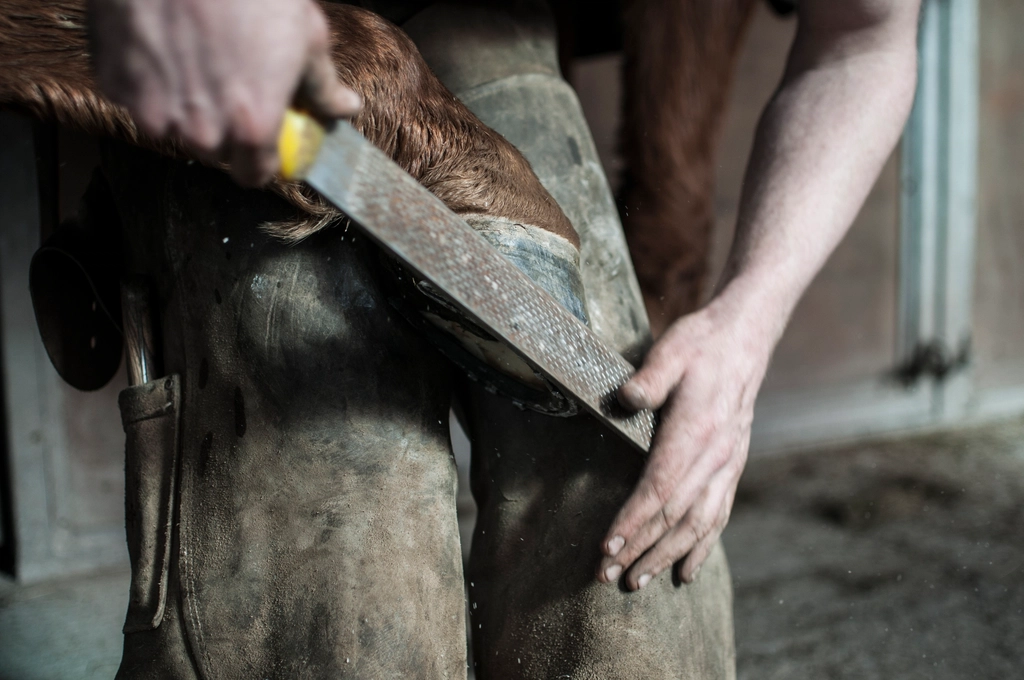
Farriers work hard, travel far, and carry significant costs — shoes, tools, fuel, time. When a client doesn't pay, that visit doesn't just generate zero income. It costs money. And unlike a shop that can withhold goods when payment doesn't arrive, a farrier cannot un-shoe a horse.
Non-payment is one of the most persistent and frustrating problems facing self-employed farriers in the UK. Most farriers have a handful of clients they're quietly waiting on at any given time. Many simply absorb the loss rather than damage a relationship by chasing formally. The cumulative cost across a year is rarely calculated — but it's almost always larger than it looks.
Why Farriers Are Particularly Exposed
- Regular, repeat visits — a farrier typically visits the same horses every six to eight weeks. Each unpaid visit adds to a growing balance that becomes harder to raise without damaging the relationship.
- Personal relationships with clients — farriers often know their clients well. The social pressure to avoid an awkward money conversation is real, and experienced farriers still find it uncomfortable.
- No formal payment checkpoint — there is no natural moment in a farrier visit where payment is expected. Unlike a shop or a clinic, the yard visit ends with the work done and no obvious payment step.
- Variable costs — a remedial shoeing job, an emergency callout, a set of front shoes only — every visit can be different, making it harder to collect by standing order.
The Patterns That Lead to Non-Payment
The accumulator
Invoices are paid irregularly — sometimes one at a time, sometimes in bulk after several have mounted up. The client isn't malicious but their payment habits are unreliable. By the time the balance becomes a real problem, raising it feels disproportionate to a single visit's cost.
The disputer
"I didn't expect it to cost that much" or "I thought that was included in the last visit." Without a written quote agreed before the work began, the farrier has no documentary record of what was agreed. The dispute is often sincere — the client genuinely misremembered or misunderstood — but the farrier has no recourse.
The avoider
Messages go unanswered. Invoices are acknowledged but not paid. The farrier is reluctant to be blunt about a still-active client relationship. The balance grows until either the farrier writes it off or the relationship ends anyway.
The Most Effective Prevention: Commitment Before the Work Begins
The most effective way to prevent farrier non-payment is not a tougher invoice chasing process. It is securing a payment commitment before the visit takes place — ideally a Direct Debit mandate that collects automatically after each job.
- The accumulator's balance never builds — each visit collects automatically.
- The disputer has approved an itemised quote before work began — the dispute has no foundation.
- The avoider made a payment commitment upfront — collection is automatic, no chase needed.
How to Introduce a Mandate-First Model Without Losing Clients
Many farriers worry that asking new clients to set up a Direct Debit will seem presumptuous or put them off. The opposite is generally true. A farrier who sends a professional quote before the visit and asks for approval before starting work is signalling quality and organisation. Most clients find it reassuring — it tells them they're working with a professional who takes their business seriously.
For existing clients, the transition is easier than it sounds. Framing it simply — "I'm moving to automatic payment from next visit, it makes life easier for both of us" — is enough for the vast majority. The clients who resist are usually the same ones already creating the payment problems.
What a Modern Farrier Payment Flow Looks Like
- Confirm the booking — before the visit, send the client an itemised quote for the planned work.
- Client approves the quote and authorises a Direct Debit — takes thirty seconds on their phone, done before you arrive.
- Complete the work — knowing payment is secured.
- Payment collects automatically — to your bank account, with a reference matching the job. No invoice, no chasing, no waiting.
Summary
A farrier client who won't pay is almost always a problem that could have been prevented upstream. The combination of a written pre-visit quote and a Direct Debit mandate eliminates the majority of non-payment scenarios — without any awkward conversations, formal letters, or written-off debt. It also positions a farrier as exactly the kind of organised, professional operator that good clients want to work with long-term.
Paddok was built for equestrian professionals including farriers — field quoting, Direct Debit mandates, and automatic collection in a single workflow designed for yard visits.